

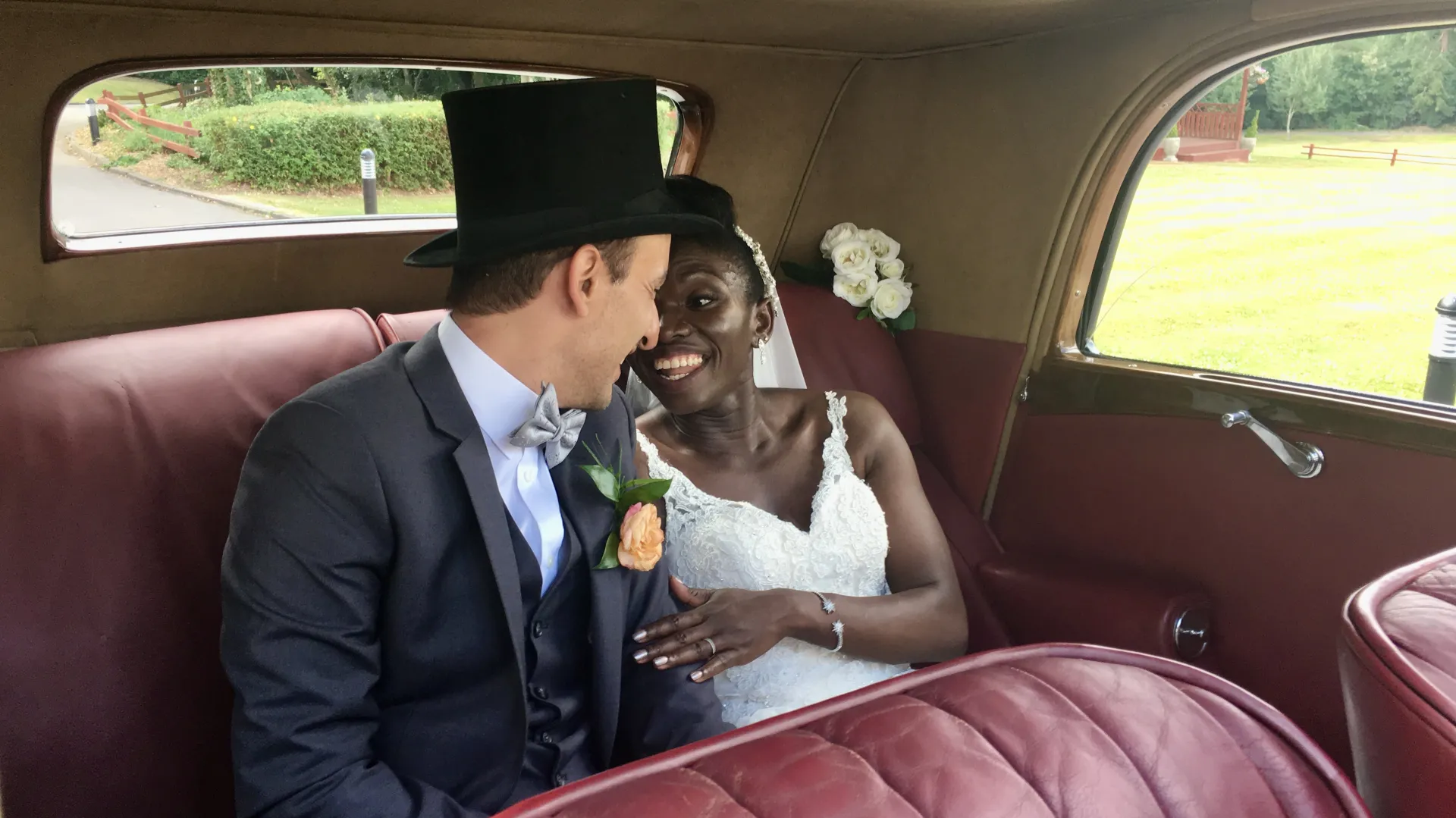
Most of our couples book their wedding car about 12 months before the wedding. The venue, photographer and caterer are often booked even earlier. That’s a lot of deposits sitting with other businesses for a long time.
If you’re asking “do I need wedding insurance?”, the short answer is no: it isn’t a legal requirement in the UK. But if losing those deposits would hurt, it’s worth the cost. Some venues also ask for liability cover before they confirm your booking.
In this guide you’ll learn what a policy usually covers, what it doesn’t, how it compares with paying by credit card, when to buy, what to spend, and how it fits with your wedding car booking. You’ll also see three real cases from our 2026 bookings where insurance would have helped.
1. Do I need wedding insurance by law? No, but your venue may ask for it
There’s no law that says you must insure your wedding. Your venue contract is a different matter.
Some venues ask couples for public liability cover, in case a guest is hurt or something is damaged. In our experience, most venues that ask want £5 million of cover.
Here’s how to check:
- Read your venue contract for the words “public liability” or “insurance”.
- Ask the venue whether its own insurance covers your guests, or only the building and staff.
- If they ask for cover, note the amount and buy a policy that includes it.
Check the venue contract first. It may decide for you.
2. Add up the deposits you can’t get back
Our couples book their wedding car about 12 months ahead, on average. A deposit paid that early is at risk for a year.
The bigger amounts sit with the venue, caterer and photographer. Our guide to the average UK wedding cost shows how the spend usually splits. If one supplier closes, or illness forces you to postpone, those deposits are what a policy protects.
Here’s how:
- List every supplier, what you’ve paid so far and what’s still due.
- Next to each, note whether the deposit is refundable and when.
- Total the money you’d lose if the wedding had to move or be cancelled tomorrow.
That total is the number your cancellation cover needs to reach.
3. Know what wedding insurance covers, and what it doesn’t
Policies differ, but most UK policies follow a similar pattern.
| Usually covered | Usually not covered |
|---|---|
| Cancelling or postponing because of illness or injury to you or a close relative | Changing your mind, or calling the wedding off |
| A venue or supplier going out of business | Anything you already knew about when you bought the policy |
| Lost, stolen or damaged items such as outfits, rings or gifts | Your honeymoon, which normally needs travel insurance |
| Public liability, if a guest is hurt or property is damaged | Engagement rings, which are often covered under your home insurance instead |
| Severe weather that stops the wedding going ahead (on some policies) | Weddings abroad, unless you add overseas cover |
| Wedding transport that fails to turn up (on many policies) | Disputes about quality, such as photos you don’t like |
Here’s how:
- Read the “what’s not covered” section before the “what’s covered” section.
- Check the limit for each part, for example transport, outfits and rings. Transport limits vary: one policy we looked at pays up to £1,000.
- Check the excess, the amount taken off any claim.
The exclusions matter more than the headline cover level.
4. Credit card protection helps, but it isn’t insurance
If you pay a supplier by credit card, Section 75 of the Consumer Credit Act can protect purchases between £100.01 and £30,000. You’re covered for the whole cost, even if you only paid the deposit on the card.
That helps if a supplier goes out of business. But Section 75 won’t pay out if you fall ill, if someone is hurt, or if your outfit is stolen.
Here’s how:
- Pay deposits over £100 by credit card where you can.
- Use insurance for the risks a credit card doesn’t cover: illness, liability and lost items.
Use both. They cover different things.
5. When to buy: as soon as you pay your first deposit
Most policies can be bought up to two years before the wedding. Buying early usually costs the same as buying late.
The catch is timing. Anything that has already happened, or that you already know about, when you buy the policy won’t be covered.
Here’s how:
- Buy cover in the same week you pay your first big deposit, usually the venue.
- Choose a cancellation level that matches your total spend, not just what you’ve paid so far.
- Update the policy if your budget grows.
Early cover costs no more and protects you for longer.
6. How much should you spend on wedding insurance?
Most policies for an average-sized UK wedding cost between about £50 and £150. Which? priced a £21,000 wedding with 99 guests at between £110 and £165.
Basic policies cost less. Higher cancellation limits, overseas cover and add-ons such as marquees cost more.
Here’s how:
- Get at least three quotes for the same cancellation level, so you compare like with like.
- Check the excess and the transport limit on each quote.
- Don’t pay for cover you don’t need, such as a cancellation level far above your total spend.
Match the cover to your spend, then compare the price.
7. Your wedding car: what our Terms of Hire already cover
Your wedding car is provided by an independent supplier from our network. Our Terms of Hire already cover several things that can go wrong.
| If this happens | What our Terms of Hire say | Where insurance helps |
|---|---|---|
| The supplier can’t provide your car | They offer an alternative or a full refund within 7 days (section 10.6) | Extra costs beyond the refund |
| The supplier cancels for safety in bad weather | They refund you directly (section 10.5) | Other costs that weather causes on the day |
| The car is late or breaks down on the day | Refund rules and a replacement where possible (section 9) | Alternative transport, on many policies |
| The supplier stops trading before your wedding | Your contract stays with the supplier. We help you find another car, but any refund is owed by the supplier (section 11.7) | This is the main gap. We strongly recommend insurance for it. |
Both risks are rare. In 30 years, no supplier has stopped trading before one of our couples’ weddings.
Weather is rare too. In the last five winters, one vintage car was cancelled because of heavy snow. The supplier sent a modern car instead and refunded the difference in price. The couple were happy with that.
Here’s how:
- Read sections 9, 10 and 11 of our Terms of Hire.
- Read what happens if the car is late or breaks down on the day, and if it breaks down before the wedding day.
- Pay your car deposit by credit card if it’s over £100. Our guide to wedding car hire prices shows what a car typically costs.
- Check that your policy includes supplier failure and wedding transport.
For your car, the biggest risk insurance covers is a supplier going out of business. It hasn’t happened to our couples, but it’s the one our terms can’t refund.
8. Three real cases from our 2026 bookings
In 2026, three situations came up where wedding insurance would have helped our couples. None of them had a policy. Here’s what happened, and what made the difference.
A bereavement two weeks before the wedding. A close member of the bride’s family died suddenly, and the couple had to cancel two weeks before the day. They had booked a Routemaster bus for £895.
At two weeks’ notice, our terms didn’t require a refund. As a goodwill gesture, we refunded £800 and kept £95.
A death in the close family is one of the main things wedding insurance covers. A policy would have covered the £95, and the money lost with every other supplier too.
Two postponements for financial reasons. Two couples had to postpone because of money worries, about five months before their weddings. One still hasn’t set a new date.
Neither got a refund. As a goodwill gesture, we’re holding both deposits towards their new date, so they won’t lose them when they rebook.
Insurance wouldn’t have helped here. Most policies don’t cover a change in your finances, though some cover compulsory redundancy.
A car held up by an accident on the day. In June 2026, a car on its way to collect a bride was stuck behind a road accident. We told the couple straight away, and they made their own way to the ceremony.
The car arrived while they were getting married. It was there for the photos and took them to the reception. Under our Terms of Hire, they received a 50% refund straight away. It was nobody’s fault, and the couple understood that anything can happen on the day.
Many policies would also pay for the alternative transport.
Here’s what these cases show:
- Strong terms of hire recover most of the money for your car, as these couples found.
- Goodwill isn’t guaranteed. Every supplier, including your venue and caterer, will have its own terms.
- Insurance is the extra layer that covers the whole wedding, not just one booking.
Our terms protect your car. Insurance protects everything else.
Our wedding insurance partner: Wedinsure
We looked at many wedding insurance policies and felt Wedinsure gave the best cover for the price. That’s why we’ve partnered with them.
Wedinsure says its cover includes cancellation because of illness of you or a close relative, supplier failure and adverse weather, with cover levels up to £100,000 and premiums from £31.
Premier Carriage may receive a commission if you buy a policy through this link. It doesn’t change the price you pay.
WedInsure is a trading name of Insuremore Ltd, registered in England No. 10525133. Insuremore Ltd is authorised and regulated by the Financial Conduct Authority, No. 824996. Policy terms and conditions apply.
Whichever insurer you choose, compare cover first. Comparison sites such as GoCompare and Compare the Market show several insurers side by side. Our wedding insurance FAQ has the short version of this guide.
Wedding insurance: quick answers
Is it worth having wedding insurance?
For most couples, yes. A policy for an average-sized wedding costs about £50 to £150, and it protects deposits that often add up to thousands of pounds. If your wedding is small, cheap and easy to move, you may decide to skip it.
At what point do you get wedding insurance?
As soon as you pay your first deposit. Most policies can be bought up to two years ahead, and early cover usually costs no more.
What is the 30 minute rule for weddings?
It’s a planning rule of thumb: a job that takes five minutes on a normal day takes about 30 minutes on your wedding day. Build that into your timings.
For your car, set your pick-up time at least 15 minutes before you need to leave. Some couples make it 30 minutes. They know the car is waiting outside, and if anything goes wrong there’s time to use their back-up plan. More timing tips are in our guide to wedding transport mistakes to avoid.
How much should you spend on wedding insurance?
Choose a cancellation level that matches your total wedding spend, then compare prices for that level. Which? found £110 to £165 for a £21,000 wedding.
Does wedding insurance cover the wedding car?
Many policies cover transport that fails to turn up, and some cover alternative transport after a breakdown. Check the transport limit and the excess. Our Terms of Hire also set out refunds if the supplier lets you down.
Pick the two or three checks that apply to you, starting with your list of deposits, and sort your cover this week.