Wedding car hire since 1996
UK-wide coverage
Hundreds of chauffeur-driven vehicles
Meet the Author: Didier Di Mario
Updated: 04/08/2026 | Published: 04/08/2026
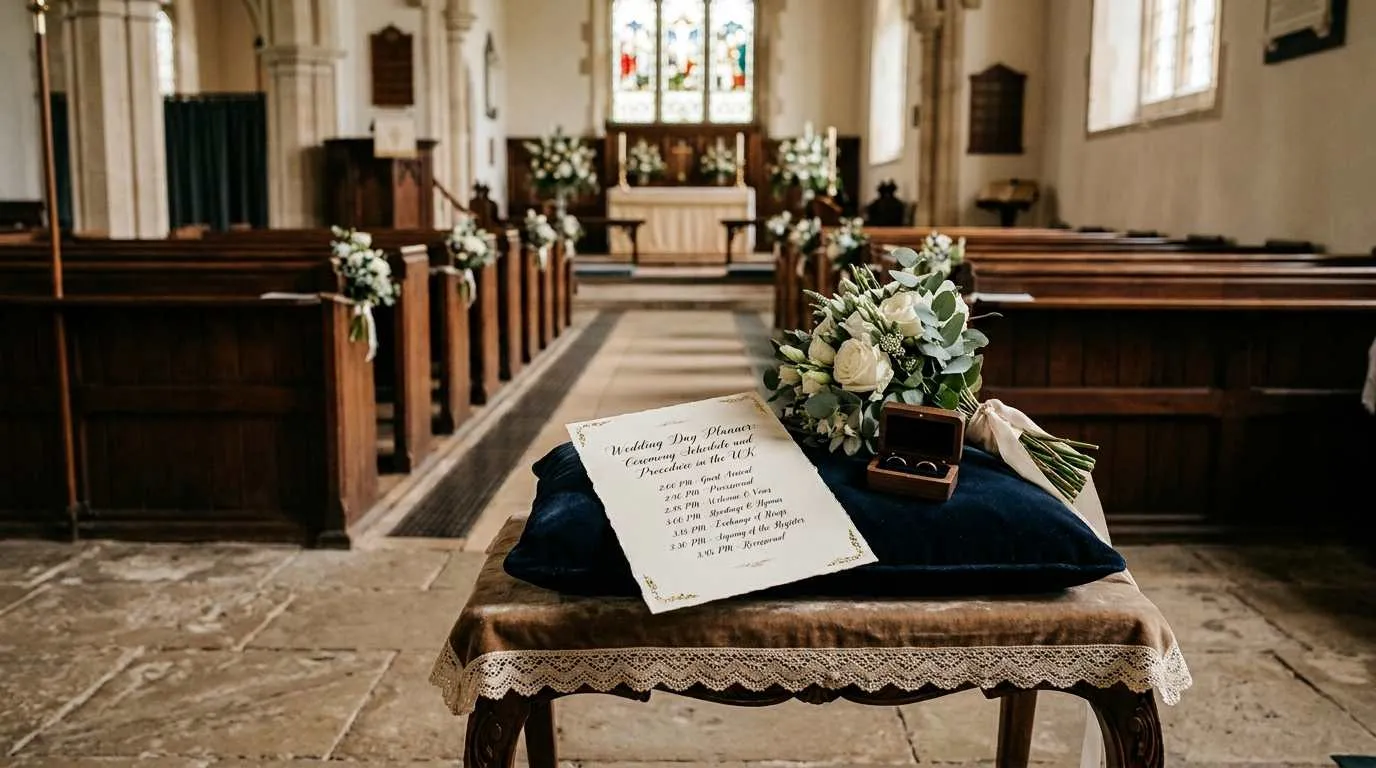
A wedding order of the day is your hour-by-hour plan, running from morning prep right through to the last dance. You share it with everyone who’s got a job to do, from your photographer to your florist. It’s the one piece of paper that keeps suppliers, family and the two of you working off the same clock. Skip it, and you risk chaos. Get it right, and you can actually relax and enjoy the day you’ve been planning for months.
This piece walks through a full sample wedding day timeline, breaks down what happens in each block, and shows you how to bend the schedule to fit your own ceremony and venue.
Skip to A Sample Wedding Day Timeline, Hour by Hour…
People constantly mix this up with the “order of service.” Worth clearing up early. An order of service is the little booklet handed out in the church or venue on the day. The wedding order of the day is something else entirely; it’s your master operational plan.
Who actually uses it? Photographer, chauffeur, florist, caterer, band, all of them. Your wedding party too. Each person really only reads the bit that concerns them.
In practice, you end up with two versions. A detailed internal one for suppliers and the wedding party, and a simplified version for guests, printed or on a board.
Quick note before diving in: these times are illustrative only. Your actual wedding day timeline shifts depending on ceremony type, season and how much daylight you’ve got. But this gives you a solid shape to build from, based around a classic early afternoon ceremony.
Here’s a worked example of a standard wedding day schedule:
10:00, Hair and makeup begins for the bridal party
10:30, Photographer arrives to capture morning prep
12:00, Bridal party fully dressed and ready
12:30, Groom and groomsmen arrive at the venue
13:00, Guests start arriving and taking their seats
13:30, Ceremony begins
14:30, Ceremony ends, drinks reception starts
15:00, Group photographs
16:30, Guests called in for the wedding breakfast
17:00, Food service begins
19:00, Speeches
19:45, Cutting the cake
20:00, Evening guests arrive
20:30, First dance, band starts
22:00, Evening food served
00:00, Carriages at midnight
That gives everyone a clear view of the day at a glance. Shift the hours forward or back as you need.
The morning sets the tone for everything after it, so get your wedding morning timeline sorted properly. Work out the order for hair and makeup first. The bride usually goes somewhere in the middle, not last. Your photographer should turn up around two hours before you leave, which gives them time for the detail shots everyone loves later. And the bridal party needs to be fully dressed well before the dress goes on.
Couples nearly always misjudge transport. Cars turn up earlier than you’d think, every time. The groom’s party has to leave well before the bride too, since they’re welcoming guests at the venue.
The best way to protect your wedding morning timeline is a proper buffer. Aim to be completely ready thirty minutes before the car’s due, not finishing your hair as the driver pulls up outside. That’s exactly how mornings turn into a scramble.
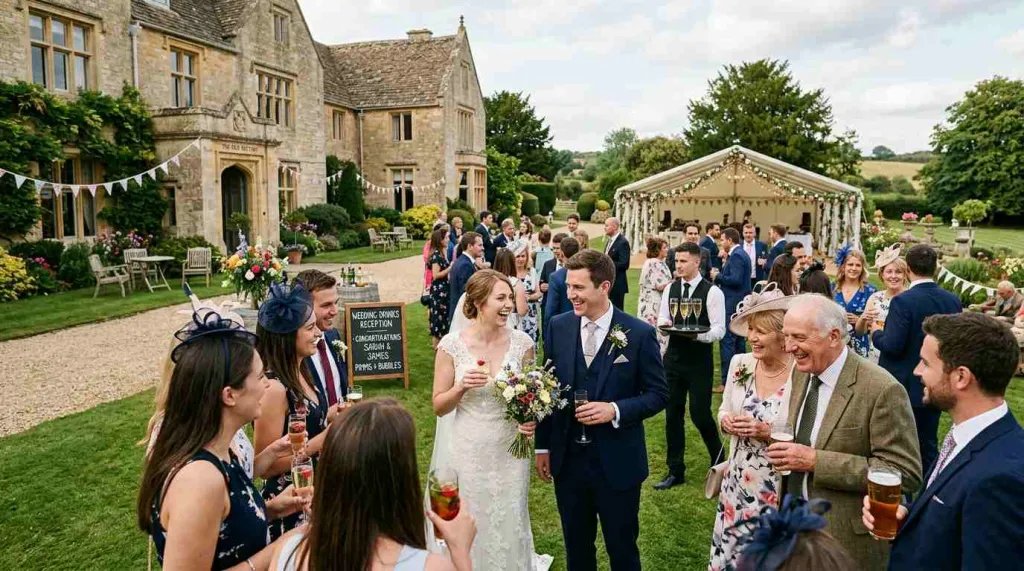
Most couples budget one hour for the drinks reception. In reality it’s closer to two, and that gap catches more people out than any other part of the day. This gap matters more to your wedding day schedule than people give it credit for.
Think about what actually needs to happen here. Group photographs. Actually eating a canapé and drinking some champagne rather than being herded around. And if the ceremony and reception sit at different venues, travel time on top of all that.
Two things reliably blow this section out. Group shots without a written list, people wander off, and the photographer burns time hunting for them. And guest transfers without a fixed departure time built into the wedding day timeline. Sort those two and the rest tends to hold together fine.
Once the afternoon wraps up, a fairly standard sequence kicks in. The typical wedding running order goes something like this: receiving line, seating, the meal, speeches, cutting the cake, first dance, evening guests arriving.
There’s a real choice around speeches. Traditionally they come after the meal. Plenty of couples now move them earlier, so nervous speakers can relax and enjoy their dinner rather than pushing food around a plate.
After the meal, it’s the evening handover, confirming band or DJ set times, sorting evening food. Once the first dance is done and the music’s going, your job’s basically finished. The wedding running order no longer needs tight coordination at that point. You and your new spouse get to step back and just enjoy the party.
A good wedding timeline template runs on buffers. Fifteen spare minutes in every block, not one big contingency hour tacked onto the end and hoped for the best.
Delays tend to start in the same places, over and over. Hair and makeup running long in the morning. Group photos always take longer than anyone expects, always. Moving a chatty group of guests between rooms or venues eats minutes nobody accounted for.
To actually build your wedding timeline template, start with the ceremony time, the one genuinely fixed point in the whole day, and work backwards from there. When you need to leave, when you need to be dressed, when you need to be up. That backwards method is really what keeps the final wedding day timeline realistic instead of hopeful.
Send the full wedding order of the day to every supplier at least two weeks out, and get arrival times confirmed in writing while you’re at it.
On the day, a coordinator or the best man should hold the schedule, not the couple. You’ve got enough going on. And for your order of the day wedding display, keep it to a simple board with just the headline moments; nobody needs the full internal version pinned up for guests to read.
If transport’s part of your plan, get that locked into the schedule early too. At Premier Carriage, we work directly off the couple’s order of the day wedding timing so pickup and arrival slot straight into the day without anyone chasing us for updates.
Sorting your wedding day timeline and want your transport locked in around it? Get in touch with Premier Carriage, and we’ll build the car timings around your schedule, not the other way round.
We use essential cookies to run this website. With your permission, we also use analytics, marketing and optional embed tools such as chat, maps, videos and social posts.
Read our cookie policyManage cookie preferences
Essential cookies are always on. Optional categories are off unless you choose them.
Essential
Required for site security, quote forms, bookings, payments and remembering your cookie choices.
