Meet the Author: Didier Di Mario
Updated: 02/07/2026 | Published: 02/07/2026
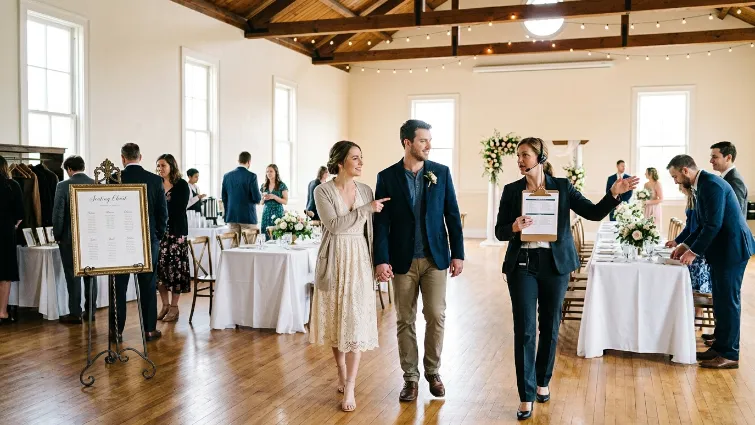
Most of the planning energy goes towards the big-ticket items: venue, dress, guest list, the seating chart that somehow takes three evenings to sort out. The rehearsal gets a single line near the bottom, treated as a formality rather than what it actually is.
It’s the one chance to catch problems before a hundred people are watching.
A proper wedding rehearsal takes an hour, maybe two. It’s also one of the easiest things on the whole list to get right - provided you actually know what’s supposed to happen during it, rather than just standing around hoping it sorts itself out.
Strip it back, and it’s simple: a run-through of the ceremony before the real thing. Who walks where, when, to what music. That’s it.
What it actually does is catch small confusions before they happen, live in front of everyone, with no second take. Most couples are surprised by how many tiny logistical questions only surface once people are physically standing in the space.
Confidence, mostly. That’s the whole benefit, if you had to pick one word.
People who’ve walked the route once, heard the cues, know roughly where to stand - they show up calmer. It’s a small thing that does a lot of work. And afterwards, a good number of couples head straight into dinner with the people who matter most, which is honestly the nicer half of the evening.
Timing trips people up more than you’d expect. The rule is straightforward, even if scheduling around it isn’t: everyone who needs to be there has to actually be able to make it, which usually narrows things down fast once travel and hotel bookings come into the picture.
A well-placed wedding rehearsal also gives the couple one last clean opportunity to confirm who’s doing what before the day’s pressure actually arrives.
This is where most couples land. By this point, guests have generally arrived, the big logistics are settled, and there’s just enough breathing room left to iron out the small stuff without piling on fresh stress.
It also gives the wedding ceremony one final, low-pressure pass, right when nerves start creeping in but there’s still time to fix something if it needs fixing.
Run through every key moment of the ceremony in order. Pay particular attention to logistics: who’s where, who’s moving when. By the time you finish, everyone involved should know exactly what they’re doing without needing to ask.
Sort out the wedding positions properly here, and you eliminate one of the most common sources of last-minute confusion. The couple, the officiant, the wedding party, close family - all of it needs to be clear before the day, not figured out on the spot.
Get this settled at rehearsal rather than improvised in the morning, and the whole thing simply looks more polished.
Worth doing properly, not glancing over. Everyone involved should actually hear the music, get the pace right, and know where any pauses fall.
It’s a small piece of preparation. It does an enormous amount for how the day looks and feels, possibly more than anything else on this list.
This is also where music cues, readings, and transitions are properly checked. Suddenly, the whole structure of the wedding ceremony clicks into place for everyone involved, rather than living only on a printed sheet nobody’s actually read carefully.
Get the timing right here, and you noticeably cut the chance of delays caused by something nobody saw coming.
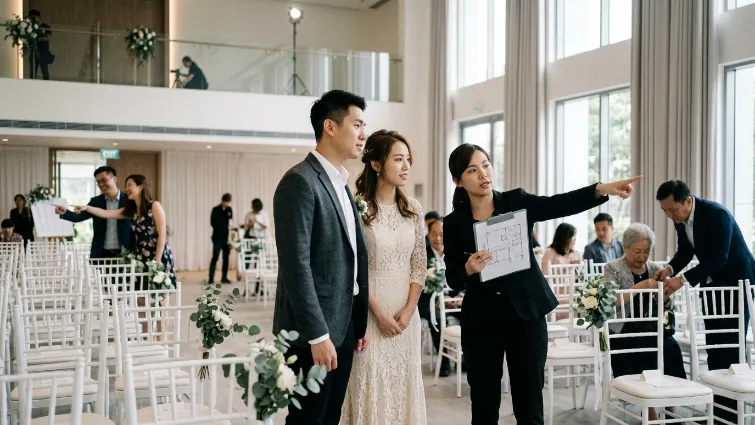
Clear wedding roles prevent a surprising amount of low-level chaos. When everyone genuinely knows what’s expected of them, the day runs with noticeably less friction. You can feel the difference.
Talk through these wedding roles early, well before the rehearsal itself, ideally, so people have time actually to ask questions rather than guessing on the day.
The bridal party typically carries the bulk of the practical load - supporting the couple, helping guests find their way, keeping half an eye on timing without making it obvious. Their involvement matters more than people tend to credit it.
Parents and other key family members each have a distinct role to play, and walking them through what’s expected in advance saves a lot of unnecessary worry. A calm, clear conversation beforehand goes further than most people assume.
A rehearsal dinner gives everyone a genuine chance to relax before the formality of the next day takes over. It’s also a natural moment to thank the people who’ve actually helped - properly, not just in a toast nobody remembers the next morning.
Formal or relaxed, the tone is entirely up to the couple. There’s no fixed template here, and that’s part of why it works.
Usually, the wedding party and the closest family. Some couples widen the list, depending on circumstances - there’s no rule for a rehearsal dinner, just whatever feels right and manageable for whoever’s hosting.
Small rehearsal dinner gifts go a surprisingly long way. A handwritten note, something personal, a keepsake that actually means something to the person receiving it - these land far better than anything generic or expensive for the sake of it.
Choosing a wedding rehearsal dress is a much more relaxed decision than choosing the main event dress. Worth a moment’s thought, though, particularly around how it sits alongside the overall tone of the celebration.
Most couples go for something elegant but considerably more comfortable than their wedding-day attire, sensibly factoring in the venue and the season.
Rehearsal outfits work best when they echo the wedding’s broader feel without trying to compete with it. Elegant, understated, well-fitted - that’s usually the safer call. Consistent with the day ahead, not attempting to upstage it.
This is also the natural point to lock down every transport detail for the following day. At Premier Carriage, we work directly with couples right here on routes, arrival times, and the exact boarding order for each vehicle. It’s the kind of detail that genuinely takes the edge off once the actual day arrives.
Sort it the evening before, and nobody’s making panicked calls about car logistics the next morning.
Confirm exact pickup times, full routes, and who’s travelling in which car. Worth checking photo locations too, and flagging anything final with your chauffeur while there’s still time to adjust - far easier the night before than scrambling on the morning itself.
Every transport schedule has to align with the ceremony timeline. Get this right, and you avoid delays, with guests and key people arriving precisely when they should, not standing around five minutes early, not causing a hold-up by arriving five minutes late.
Skipping it entirely or rushing through in ten minutes happens more than you’d think, and it’s avoidable. A rushed wedding rehearsal rarely does what it’s meant to. Most problems on the actual day trace back to someone being unclear about their role, or to transport details that nobody properly confirmed.
Solid preparation here is genuinely what lets even a fairly complicated wedding ceremony run smoothly, with everyone actually feeling confident rather than just hoping for the best.
Sorting transport early takes one major thing off your list. At Premier Carriage, we’ve been helping couples confirm their wedding-day logistics since 1996 - routes, timings, and vehicle details locked in well before the rehearsal even happens. Check availability for your date in under two minutes.
We use essential cookies to run this website. With your permission, we also use analytics, marketing and optional embed tools such as chat, maps, videos and social posts.
Read our cookie policyManage cookie preferences
Essential cookies are always on. Optional categories are off unless you choose them.
Essential
Required for site security, quote forms, bookings, payments and remembering your cookie choices.
