Meet the Author: Didier Di Mario
Updated: 26/05/2026 | Published: 26/05/2026
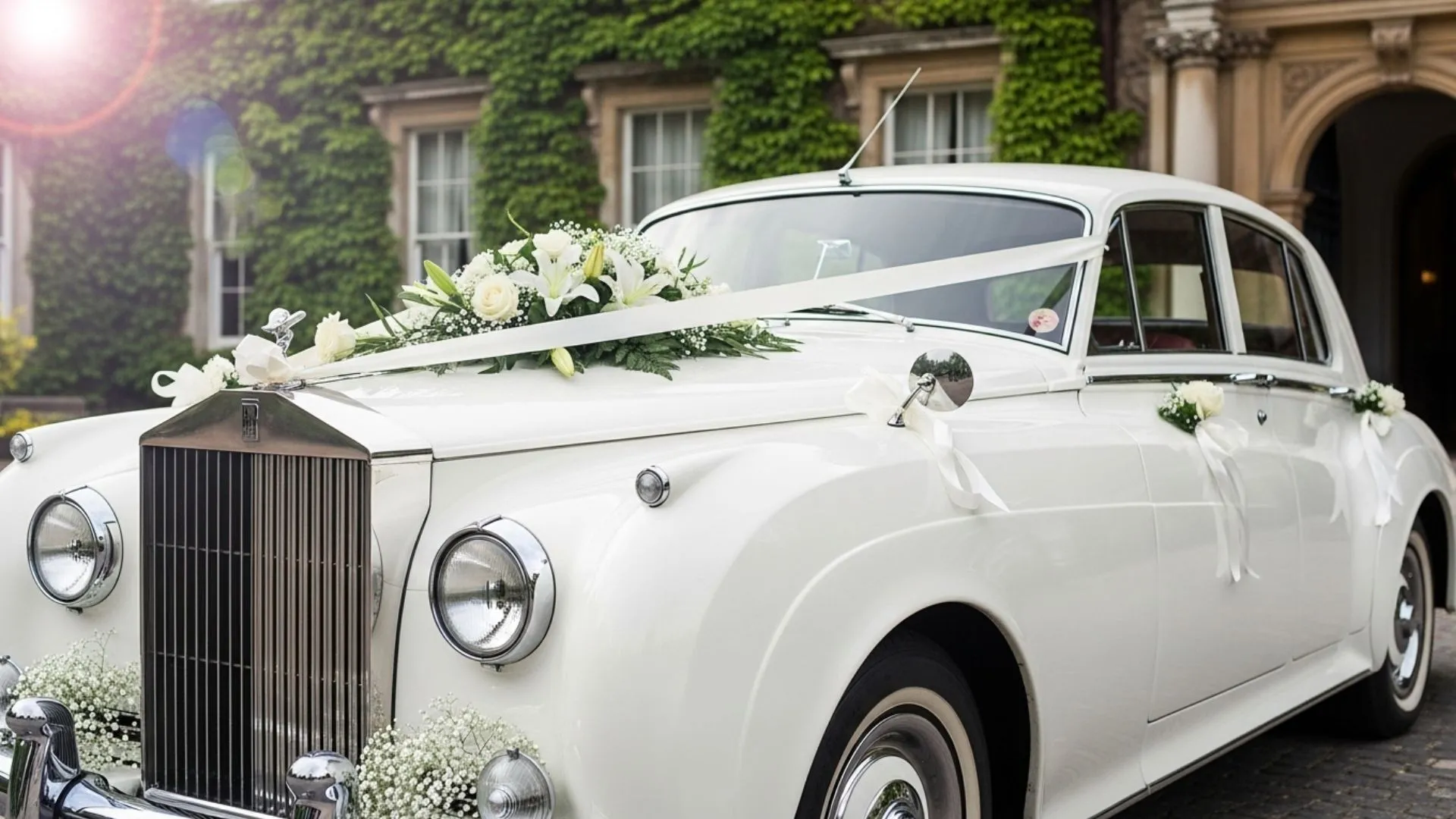
Ask any couple what kept them up the night before their wedding, and you will hear the usual suspects: will the flowers arrive on time, has someone remembered the rings, is Auntie Patricia actually going to behave herself? Transport rarely makes that list. Until about six weeks out, when someone asks who is supposed to be in which car, and nobody has the faintest idea.
That is precisely why wedding car etiquette is worth understanding properly. Not because every old rule needs to be followed to the letter, but because a bit of structure genuinely takes the stress out of the morning. Good wedding etiquette around transport means everyone knows where they should be and when - and the day flows better for it.
Traditionally, the bride travels with the person who gives her away, most often her father. In practice, weddings today look all sorts of different ways. Plenty of brides choose their mother, a sibling, a grandparent, or a best friend they have known since school. It is entirely up to you.
The groom heads to the ceremony separately, usually with his best man. There’s a practical reason for this: it allows him to arrive before the bride, settle in, and get ready to greet the guests, rather than standing by the roadside adjusting his boutonniere.
Bridesmaids travel together, which is worth thinking through if the dresses are full or delicate. If you are choosing a bridal car with a narrower interior, check the door width and seating room before you commit. Comfort matters far more than many people realise until the morning itself.
A growing number of couples travel to the ceremony together, tradition aside. Sometimes nerves get the better of both of you, and a few quiet minutes before it all begins is exactly what you need.
This is one of those questions that sounds simple and turns out not to be. A small, intimate wedding with both venues in the same village might need only one car. A large celebration with an extended family and a reception several miles away is a different calculation entirely.
When working out how many cars to book, think through:
How many people need a formal lift, and from where
Whether any elderly relatives require easier access
How far apart are your venues
Whether you are stopping for photographs between the ceremony and reception
What parking is actually like at the venue
Some couples put all the budget into one beautiful wedding car for the two of them and sort the rest with ordinary taxis. Others like the look of a matched set. Both are perfectly reasonable - it comes down to what matters to you. One thing worth remembering: even a twenty-minute drive can go sideways if you have not accounted for Saturday traffic.
This is one area where the old customs still hold up, mainly because they work. The groom and best man arrive first. Then close family and bridesmaids. The bride comes last.
It creates a moment - guests are seated, the room is quiet, and then she arrives. Changing that order tends to muddy it.
After the ceremony, the couple leave first while guests spill outside for confetti and photographs. If you want to stop somewhere on the way to the reception, tell the driver when you book, not in the morning. A good chauffeur will plan the route accordingly.
Couples who favour more formal celebrations, particularly church weddings, tend to follow the wedding etiquette UK traditions closely. Venues with tight schedules often expect it.
Ribbons across the bonnet have been part of wedding cars for longer than anyone can remember. They remain popular for good reason - simple, elegant, and instantly recognisable. White and ivory are the classic choices for wedding car decoration, but there is no rule against matching your ribbons to the bridesmaids’ dresses or the bouquet.

Many couples say the drive to the ceremony is one of the moments they remember most clearly - a few quiet minutes before the celebrations truly begin. The most effective thing you can do is book early. The best wedding cars go months in advance, particularly for summer Saturdays. Once you have chosen your vehicle, confirm everything in writing.
In the week before the wedding:
Confirm pickup times and addresses with the driver directly
Check the route for roadworks or known bottlenecks
Make sure someone on the day has the driver’s mobile number
Keep a small emergency kit in your bag - safety pins, a hair grip, a tissue
Pack an umbrella, whatever the forecast says
If the road to your venue gets busy at weekends, say so when booking. Some venues (especially older country houses) also have access restrictions that larger wedding transport simply cannot navigate. Worth checking both ends of the journey in advance.
The most common one is leaving the booking too late. Couples who find the car they love and think they will come back to it often do not get a second chance. Popular vehicles go early.
The second is underestimating how long the journey actually takes on a Saturday afternoon. A route that clears in fifteen minutes on a Tuesday can take the better part of an hour when the weekend traffic is out in force.
Decoration is another area where assumptions cause problems. Never presume that specific ribbon colours are included - always confirm in writing. Other wedding car etiquette points that are easy to miss:
Choosing a vehicle that looks wonderful but is genuinely awkward in a fitted dress
Forgetting about parking at the venue, which can add unexpected time pressure
Not confirming collection arrangements with family members who need a lift
None of these are disasters, but all are avoidable with a bit of planning.
The vehicle you arrive in says something about the day you are having. A Silver Cloud Rolls-Royce or a classic Bentley fits a formal celebration in a way that a modern saloon simply does not - and vice versa. Think about the photographs, too, because the car will be in many of them.
For countryside venues, couples often look for something with real character - a vintage Beauford, a classic Jaguar, something that belongs in that landscape. City weddings suit different choices entirely. And then some throw out the template altogether and arrive in something nobody is expecting: an American Cadillac, a VW campervan, a vintage London bus for the whole party.
There is a wide range of wedding cars available across the UK, and the choice is genuinely worth thinking through. One well-chosen vehicle does not just get you from A to B - it becomes part of the day itself, and part of the photographs you will still be looking at in thirty years.
That, at the end of it all, is what good wedding car etiquette is really about. Not rules for the sake of rules, but making the practical side of the day so well organised that you barely have to think about it.
Historically, it fell to the bride’s family. Most couples today simply factor it into their joint budget - though if parents are contributing to the day overall, it is worth a quick conversation about what is covered.
White and ivory are the classic choices and are hard to get wrong. Beyond that, matching your ribbons to the bridesmaids’ dresses or bouquet colours is a nice touch that photographs well.
It is not a hard rule, but it is a sensible one. Having the groom there ahead of the bride means the ceremony can begin the moment she arrives - no awkward waiting at the altar.
Ask the driver to be there 20 to 30 minutes before you need to leave. Getting a full wedding dress into the back of a car takes longer than anyone anticipates, and a buffer prevents the photographs outside the house from turning into a panic.
Most companies will allow it, but ask before you assume. They tend to be protective of the paintwork, which means certain adhesives may not be permitted. When in doubt, ask what they recommend rather than turning up on the day with your own supplies.
We use essential cookies to run this website. With your permission, we also use analytics, marketing and optional embed tools such as chat, maps, videos and social posts.
Read our cookie policyManage cookie preferences
Essential cookies are always on. Optional categories are off unless you choose them.
Essential
Required for site security, quote forms, bookings, payments and remembering your cookie choices.
