Meet the Author: Didier Di Mario
Updated: 15/06/2026 | Published: 11/06/2026
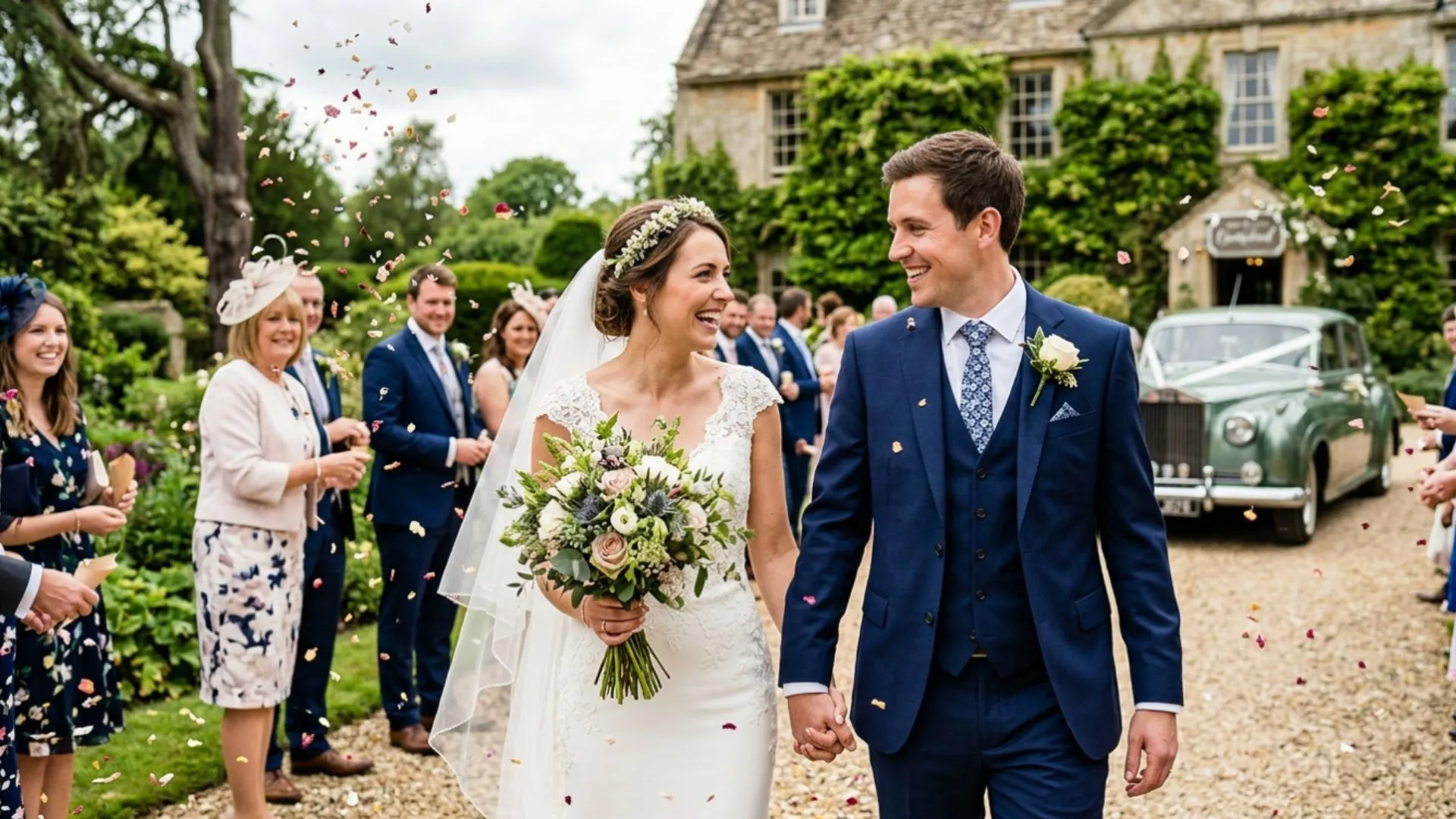
Getting married in the UK is its own particular kind of balancing act. There are centuries of expectation quietly hovering in the background: the church, the white dress, the three speeches, the fruit cake nobody actually enjoys, and then there’s the couple standing in the middle of it all, trying to work out which bits genuinely matter to them.
You don’t have to do any of it if it doesn’t feel right. British wedding traditions exist to give a celebration structure and meaning, not to stress people out. Pick what resonates. Leave the rest.
Most ceremonies in English weddings follow a fairly recognisable shape, whether they happen in a centuries-old stone church or a modern registry office in a converted Victorian building. The processional, the vows, the ring exchange, the signing of the register - these are the bones of British wedding ceremony traditions, and they’re standard for a reason. They give guests a roadmap and the couple a structure in which to actually be present, rather than worrying about what comes next.
That said, the best moments tend to happen when couples make deliberate choices within that structure rather than defaulting to everything. Personal vows, written from scratch rather than borrowed from a standard text, tend to hit differently - you can always tell which is which, and so can everyone in the room. Music is another place where choices matter: a processional that genuinely means something will stay with guests far longer than the obvious classical choices.
The practical things: keep the processional simple. Choose witnesses who actually know you. And if you’re having readings, shorter is almost always better.
Old wedding traditions have a strange staying power in British weddings, even among couples who’d consider themselves fairly unsentimental about that sort of thing.
“Something old, new, borrowed, or blue” is still observed at the vast majority of UK weddings, usually with the bride tucking something small and blue into her shoe or borrowing a piece of jewellery from her mother. It costs nothing, takes about two minutes to sort out, and it connects the day to something older than either of you. That’s worth something.
The veil is interesting. Its original significance (supposedly protecting the bride from evil spirits) has essentially nothing to do with why people still wear them. They wear them because they look extraordinary. Because they photograph beautifully. Because they feel like “wedding” in a way that’s difficult to articulate and entirely unnecessary to justify.
The carrying over the threshold is mostly a photo opportunity at this point. But it’s a fun one.
English weddings have this quietly terrifying unwritten rulebook that makes many guests anxious for no good reason. Hats for the women, suits for the men, speeches that are somehow expected to be both funny and heartfelt without going on too long.
The speeches are genuinely the trickiest bit to manage. Three speeches - father of the bride, groom, best man - five minutes each, maximum. That’s the formula. Any longer and the room starts to lose focus around the edges, no matter how strong the material is. The best man’s job is not to humiliate the groom. It’s to entertain a room full of people who don’t all know each other, which is actually quite hard.
On practical etiquette: invitations should go out early, because people need to book travel and accommodation. Be specific about the dress code - “smart casual” genuinely means different things to different people. And send handwritten thank-you cards after the wedding.
The best thing happening to British wedding traditions right now is that couples are getting much better at editing them. Rather than trying to do everything, they’re identifying the moments that carry real emotional weight and putting effort into them.
Nobody particularly cares whether you follow every single convention. If you want a food truck and lawn games instead of a formal sit-down dinner, do it. If you want an outdoor ceremony in a slightly muddy field followed by an informal party in a barn, that’s a legitimate choice. The transport still matters. There’s a reason a Beauford Convertible with ribbons across the bonnet is one of the most-booked vehicles in the country. It’s not just a tradition, it’s rather an atmosphere.
The couples who have the most memorable days tend to be the ones who’ve thought carefully about which traditions are genuinely theirs, and dropped the rest without guilt.
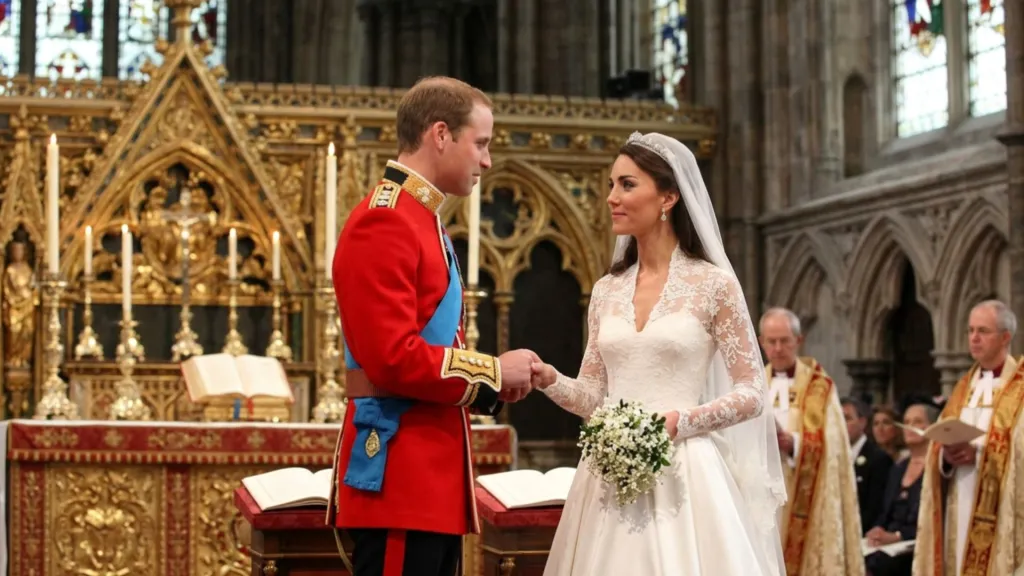
Most of us aren’t getting married at Westminster Abbey, and this is, objectively, fine. But British royal wedding traditions are worth studying not because you should copy them, but because they understand something about ceremony and spectacle that scales down surprisingly well. The grand exit. The sense of occasion in a single moment. The way a well-timed gesture can make five minutes feel like something everyone in the room remembers.
You don’t need a carriage or a Westminster Abbey postcode to create that feeling. You do need to think about where the memorable moments in your day will come from, and make sure something meaningful is actually happening in those spaces.
Some weird wedding traditions have survived in Britain long past any reasonable explanation, and they’re better for it.
The Scottish “blackening” (where the couple is doused in soot, flour, eggs, and various other unpleasant substances by friends and family before the wedding) sounds, on paper, like a complete disaster. In practice, it’s chaotic and communal and genuinely funny, and it produces photographs nobody forgets. It is, in a roundabout way, the entire point: weddings are supposed to be a real party, and anything that reminds everyone in the room of that is doing something useful.
Regional traditions carry stories. They place the couple somewhere specific, connect the day to something older, and give guests anecdotes that last well beyond the weekend.
British weddings have a distinct visual language that’s recognisable even at the smallest scale.
The white gown has been standard since Queen Victoria established it in 1840, and 185 years later, it still works. Tailored suits for the groomsmen, a morning coat, lace with genuine family history behind it - these details carry symbolic weight that modern alternatives rarely match. Symbolic colours do real work too: white for purity, blue for fidelity, both with histories long enough that wearing them feels like a deliberate nod rather than an accident.
Seasonal styling matters more than it sometimes gets credit for. Matching the attire to likely British weather (layers for autumn, lighter fabrics for June, something that won’t be ruined by an unexpected shower at 4 pm) is practical wisdom dressed up as an aesthetic choice. Both things can be true.
The reception is where British wedding traditions tend to relax into something more genuinely celebratory.
The first dance remains one of the most-watched moments of any reception. Choose something you can actually dance to rather than something that felt deeply meaningful at 11 pm, six months before the wedding. The cake cutting is brief and photogenic. The speeches should ideally be done before this point, which is the correct order and makes everyone visibly relax.
The tradition worth preserving through all of this isn’t any single custom. It’s the intention behind them - to mark something real, to bring people together, and to give everyone present a day worth remembering.
Your arrival sets the tone before a word is spoken. At Premier Carriage, we’ve been helping couples get to their ceremonies in style since 1996, with over 900 chauffeur-driven vehicles across the UK. Check availability for your date in under two minutes.
We use essential cookies to run this website. With your permission, we also use analytics, marketing and optional embed tools such as chat, maps, videos and social posts.
Read our cookie policyManage cookie preferences
Essential cookies are always on. Optional categories are off unless you choose them.
Essential
Required for site security, quote forms, bookings, payments and remembering your cookie choices.
